Our Picks are our coffee recommendations (some consider it our coffee equipment review). We’ve assembled this list of tips and pointers because not a day goes by where someone doesn’t ask us how to brew a solid cup of coffee. Based on extensive usage, here’s some of our favorite tried-and-true home products that can help you better enjoy your favorite coffee…
Of course you can buy more expensive or commercial grade equipment (should your budget, and more importantly, counter space permit). But the equipment we list below are not only a great starting point in the realization of a beautifully brewed cup of coffee; they are also a perfectly acceptable ending point as well. What’s the best cup of coffee? The one that keeps you sipping, and surprises you that there’s no more left in your mug.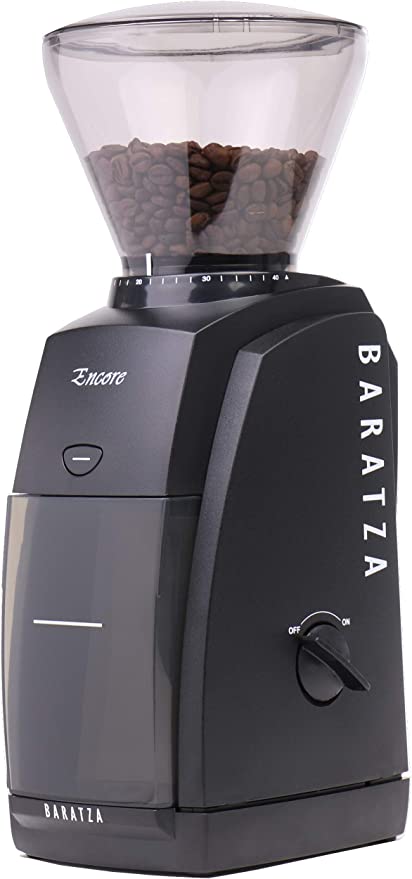
- A quality burr grinder with stainless steel or ceramic burrs is what you want; there’s just no comparison (Be warned, hand cranks can be great but take a lot of work). This electric grinder by Baratza– Baratza Encore –gets the job done quite well, especially for the price. If money is tight, at the very least use a blade grinder; for the price, it’s tough to beat this one by Amazon. Coffee that is freshly ground by any type of grinder, is more aromatic than a coffee that is pre-ground. [On a side note,.. We’ve tested every residential grinder under $300 that we could get our hands on, and regardless of price, all fall short for home use. The problem is versatility; if it grinds beautifully for a press pot (French Press), a proper espresso grind is impossible to achieve. And if it can do both adequately, dark roasted beans clog the delivery chute. If you’ve found a grinder under $300 that can grind espresso to French Press, please tell us about it!]
- Proper measuring spoon: your dining set’s “tablespoon” is anything but a proper tablespoon. Probably the easiest and cheapest way to step-up your game.
- Proper measuring cup: you may be surprised to find just how much coffee your favorite travel mug holds (OXO has one that’s easy to read).
- Speaking of travel mugs, (this one by Mira will last a decade) stick to a stainless steel, vacuum insulated mug. Plastic interiors get loaded with flavor taints, and non-vacuum insulation doesn’t cut it in cold climates.
- Thermometer: unless you’re making a cold brew toddy, 195 – 205 degree Fahrenheit water is ideal (We’re big fans of this one by Taylor).
- There’s more water in your coffee, than coffee– over 98% to be more precise! A water filter is highly recommended, and this little faucet unit by Aquasana works quite well (and it’s great for renters – easy to install, and easy to take with you when you move). Pitcher filters like this one from Brita also get the job done quite economically. At the very least, use bottled spring water (do not use distilled or reverse-osmosis water) for it lacks sufficient TDS to extract the most flavor out of your beans.
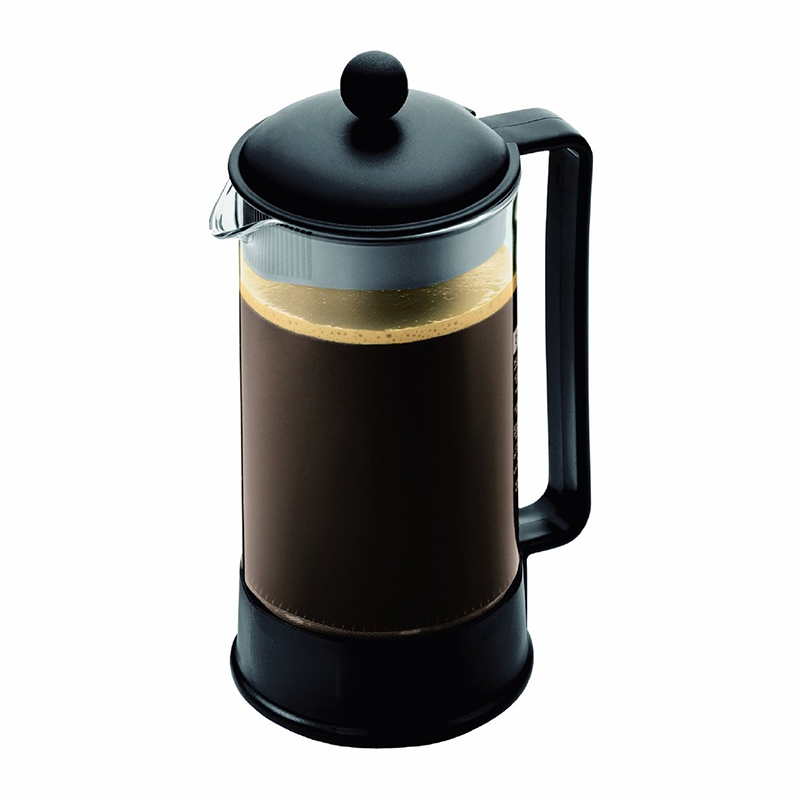
- A Press Pot (aka French Press) like the kind made famous by Bodum is the best way to brew a thicker, heavier, full bodied cup. If you’re not going to drink the entire pot in one fell swoop, a vacuum insulated, stainless steel French Press is mandatory, and Frieling adds some elegance to theirs.
- If you like a pot full of drip, Bonavita has several models that are great. The majority of home drip brewers just don’t get the water hot enough– this one does.
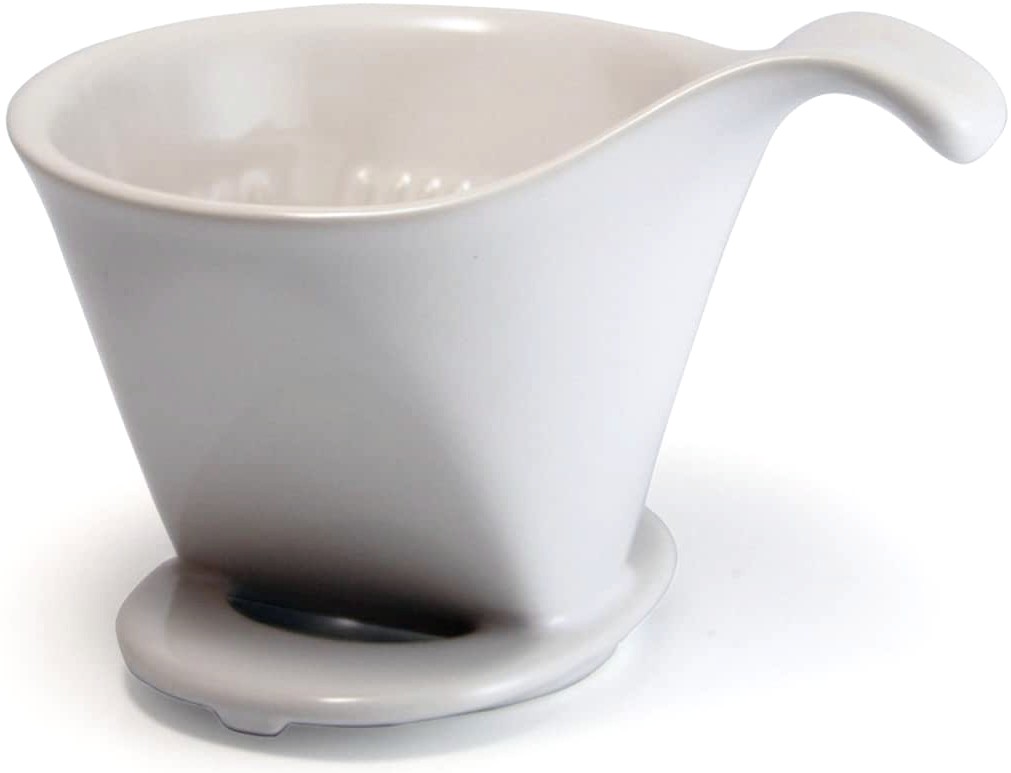
- If you haven’t discovered the contemplative ritual (or sheer joy!) of brewing a single cup at a time, maybe you should start now with a porcelain pourover (some spell it “pour-over” and others call it a “dripper”). This porcelain pour-over by Zero Japan / Bee House is perfect for brewing one cup of coffee at a time. And it will last you a lifetime, literally. It uses paper filters that are easily found in supermarkets and quick stops, not just online or in a coffee shop. This #4 cone filter by Melitta works nicely.
 We don’t like plastic touching our coffee, but for travel purposes we’re willing to compromise and use this great plastic dripper by Hario “the Cafeor” which filters through a wire mesh and doesn’t require a paper filter. A single cup brewer with built-in metallic filter is arguably the most eco-friendly and environmentally sustainable way to make a cup of coffee. It is also the least expensive cup of coffee that can be made, but that does not mean it can’t taste fantastic. The “earth friendly” attributes, cup quality, and cost per cup of a single cup dripper with metallic filter puts all versions of Keurig and Nespresso to shame.
 - We prefer paper filters over metallic, but others would argue otherwise.
- And be sure to time your drip, perk, or french press with a timer (4 minutes of water to grinds contact, aka dwell time, is a good guide).
- Say what you will about the quality of stovetop espresso– 26 million Italian households can’t be wrong! Besides, the aesthetics of a Bialetti stovetop espresso maker (called a “caffettiera,”
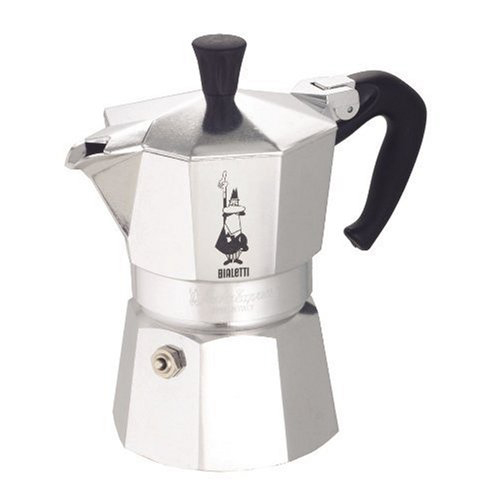 “macchinetta” or “la moka” in Italy) certainly make-up for any minor shortcomings in flavor. We’re partial to the 3-cup, for it tends to make the best tasting cup of all the sizes available. While on the topic of espresso, we’re impressed by this home unit by Breville, the Barista Express espresso machine. The Barista Express is capable of making espresso, cappuccino, and lattes that rival your favorite coffee shop. And it gives machines costing nearly 10 times the price a run-for-the-money.
 - And lastly, be sure to keep all your equipment and mugs sparkling clean with some Puro Caff, Urnex Cafiza, or Joe Glo– this stuff works wonders (just don’t use any of them on aluminum– especially your Bialetti moka pot!).